
Memory Care
Most families do not go looking for memory care in Arvada until something forces the question. A stove left on. A drive to the grocery store that turned into three hours. A parent who has always been sharp asking the same question for the fourth time in an hour. By the time you are reading an article like this one, you have usually already been carrying something heavy for a while, often alone.
Here is what we want you to know up front: memory care is not a last resort, and needing it is not a failure of anyone’s love or effort. It is a specific kind of licensed care with rules attached, a price tag that surprises most families, and a set of questions you can ask that will tell you very quickly whether a community is right for your parent. This guide covers all three. Our founders went through this exact search for their own family before Harmony existed, which is why we know how much easier this gets when someone explains the ground rules first.

In Colorado, “memory care” is not its own license category. Memory care is provided inside a licensed assisted living residence that has chosen to operate what the state calls a secure environment, regulated by the Colorado Department of Public Health and Environment under 6 CCR 1011-1, Chapter 7, Part 25.
That distinction matters more than it sounds. A community can advertise a memory care program, but what makes it legally a secure environment is that it uses methods or devices to limit a resident’s ability to leave the building or a distinct part of it unsupervised. Once a community does that, a whole set of extra requirements switches on.
Before your parent moves in, the community is required to disclose to you in writing four things: the criteria for admission and the assessments used to determine need, the physical location of the secure environment and the specific methods of restriction used, how resident safety is monitored both inside the building and in the outdoor areas, and a description of the memory care and special care services offered, including daily engagement opportunities. You are also entitled to a pre-admission assessment that determines whether a secure setting is actually appropriate.
One more protection is worth knowing. No one can be required to move into a secure environment against their will unless legal authority for that decision has been established through guardianship, a court order, a medical durable power of attorney, a health care proxy, or another means allowed by Colorado law. If a community glosses over this, that tells you something.
Harmony has a fuller breakdown of the state’s rules in our guide to Colorado assisted living regulations.
The difference between assisted living and memory care is not the amount of help. It is what the help is designed to protect.
Assisted living is built around physical support: help with bathing, dressing, medication, meals and mobility, for someone who still knows where they are and can make reasonable decisions about their own safety. Memory care is built around cognitive support and safety awareness. Staff are trained in dementia specific communication, care plans directly address wandering and safety risk, the physical layout uses clear wayfinding so residents can navigate without getting lost, and the outdoor space is enclosed so someone can walk outside whenever they want without leaving the property.
The practical consequence catches families off guard. Colorado regulation prevents an assisted living residence from admitting a person who is profoundly disoriented to time, person and place with safety concerns requiring a secure environment, if that residence does not provide one. That is why a parent can be perfectly settled in assisted living for two years and then be told the community can no longer meet their needs. It is not the community giving up. It is the license.
There is no single threshold, but the honest answer is that most families wait longer than they should, and almost none regret moving sooner once they have.
The signal to watch is not memory loss itself. It is the gap between what your parent believes they can safely do and what they can actually do. Memory care becomes the right answer when that gap has grown wide enough that supervision has to be constant.
If two or three of these are true at once, it is worth having a conversation now rather than waiting for the incident that makes the decision for you.
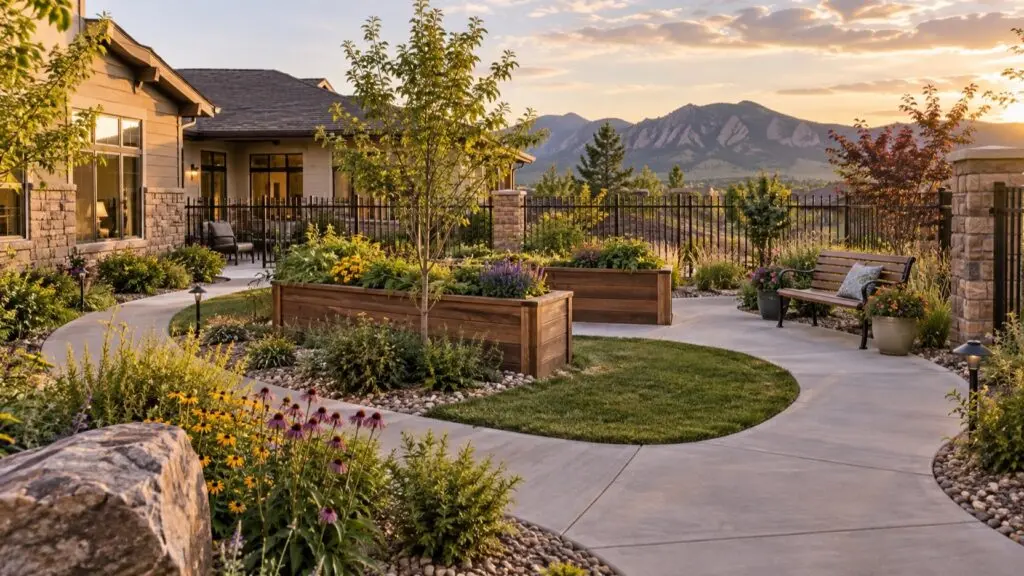
Arvada families generally choose among three different models, and the right one depends far more on your parent’s temperament than on amenities.
A secure neighborhood inside a larger community. This is the most common option. The community offers independent or assisted living alongside a dedicated, secured memory care wing with its own staff, dining and courtyard. Gardens on Quail on Quail Street runs its memory care as a neighborhood called Dallas Creek, with 27 private apartments, fireplace centered common rooms and a secure courtyard with walking paths, a water feature and a garden train set. MorningStar of Arvada operates its Reflections Neighborhood with 29 secure suites and an enclosed courtyard. Springwood Retirement Campus on Yank Way, locally owned since 1987, runs Nightingale Lane as its secure memory care neighborhood with its own enclosed backyard, and has been recognized by the Alzheimer’s Association as a leader in dementia care. Amira Choice Arvada, Brookdale Arvada and Stonebridge Senior also offer memory care alongside assisted living. The advantage is depth of resources and the ability for a couple to stay on one campus at different care levels. The tradeoff is scale, which suits some parents and overwhelms others.
A small residential memory care home. These are houses in ordinary neighborhoods, licensed and secured, serving a handful of residents with a very high staff to resident ratio. Applewood Our House runs two of these in Arvada, including a North Arvada home with sixteen private rooms, and has operated in the area since 2013. Gardens Care Senior Living, a family owned operator that grew out of The Gardens Care Homes, runs small residential communities serving the north Denver metro as well. For a parent who is anxious in crowds, who does better with the same two or three faces every day, or who finds a large dining room distressing, this model is often dramatically better. The tradeoff is fewer on-site amenities and less programming variety.
A campus with skilled nursing available. When dementia is advanced or paired with significant medical needs, a secure assisted living environment may not be enough. Arbor View Senior Living on West 71st Avenue near Olde Town, founded in 1964 as the Colorado Lutheran Home and now managed by WellAge, combines independent living and assisted living with 120 skilled nursing beds on the same 13 acre campus. Families sometimes search for Arbor View nursing and rehabilitation for exactly this reason, because it removes one future move.
One caution worth naming. Not every recognizable senior living name in Arvada actually provides memory care at its Arvada address. The Oberon House, part of Rocky Mountain Assisted Living, offers independent and assisted living at its Arvada location, but its dedicated memory care homes are in Wheat Ridge and Lakewood. Always confirm the care level at the specific address, not the brand.
For a community by community breakdown, see our companion guide to memory care facilities in Arvada, or our memory care services page if you would rather have us do the narrowing for you.
Memory care costs more than assisted living, and the premium is real rather than marketing. Higher staff to resident ratios, dementia specific staff training, secured construction and specialized programming all carry cost.
Statewide, the 2025 CareScout Cost of Care Survey put the median cost of assisted living in Colorado at roughly $6,584 a month. Memory care in Colorado typically adds somewhere between $950 and $1,187 a month on top of an assisted living rate, or runs 20 to 30 percent higher overall. Across the Denver metro, monthly memory care pricing commonly lands between $5,500 and $7,500, with higher end communities above that.
For planning purposes in Arvada, most families should expect a realistic all-in range of roughly $6,000 to $8,500 a month, depending on the model, the apartment and the level of care. Small residential homes sometimes come in lower. Large communities with high acuity residents run higher. Ask specifically whether pricing is all inclusive or whether care levels are billed on top of a base rate, because that single question can move the real number by $1,500 a month.
On paying for it:
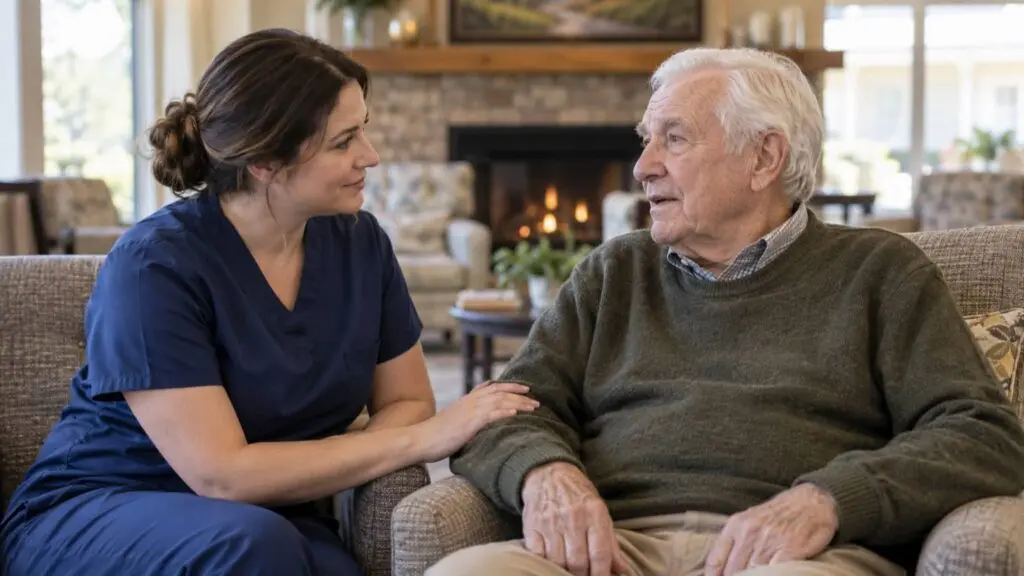
Tours are designed to impress you. Here is how to see past that.
It is time when your parent’s safety depends on supervision that cannot realistically be provided at home or in their current setting. The most common triggers are wandering, repeated medication errors, a fall or safety incident, significant decline in personal care, and caregiver exhaustion. Most families move when two or more of these are happening at once. Waiting for a crisis usually means fewer choices and a rushed placement.
Assisted living provides help with daily physical tasks like bathing, dressing, meals and medication for someone who can still make safe decisions about themselves. Memory care provides that same help plus a secured environment, dementia trained staff, wayfinding designed for cognitive impairment, and care plans that specifically address wandering and safety awareness. In Colorado, memory care operates as a secure environment inside a licensed assisted living residence.
Usually when the assisted living community says it can no longer meet the resident’s needs safely. Colorado regulation prohibits an assisted living residence from housing a person who is profoundly disoriented with safety concerns requiring a secure environment if that residence does not provide one. Practical warning signs include exit seeking, getting lost inside the building, increased falls and behavior that staff cannot redirect.
Most Arvada families should plan on roughly $6,000 to $8,500 a month, depending on the community model, apartment size and level of care needed. Colorado’s median assisted living cost was about $6,584 a month in the 2025 CareScout survey, and memory care typically runs 20 to 30 percent higher, or about $950 to $1,187 more per month. Always ask whether the quoted rate is all inclusive or whether care levels are billed separately.
No. Medicare does not pay for room and board in a memory care community. It covers medical care such as doctor visits, hospital stays, prescription drugs and a limited period of skilled nursing after a qualifying hospital admission. Residential memory care is paid through private funds, long term care insurance, VA benefits for eligible veterans, or Colorado’s Elderly, Blind and Disabled Medicaid waiver for those who meet the financial and level of care requirements.
Ask for the written secure environment disclosure Colorado requires, then watch how staff speak to residents rather than how the building looks. Ask about overnight staffing ratios, caregiver turnover in the memory care wing specifically, and the circumstances under which a resident would be asked to leave. Walk the secure outdoor space and confirm it has a looping path. Visit a second time unannounced in the late afternoon, and review the community’s inspection history with CDPHE before signing anything.
Comparing memory care communities in Arvada while you are also managing your parent’s daily care is a lot to carry. You do not have to do it alone, and you do not have to pay for help.
Harmony Senior Referrals is a local family that walked this road before we ever made it our work. We know which Arvada communities have genuine memory care openings right now, which ones are strongest for a particular temperament or level of need, and which questions get straight answers. We tour with you, we sit in on the conversations, and we tell you the truth about fit.
Our service is always 100 percent free for families.
Book your free consultation or call us today at (303) 667-2420.
If you are earlier in the process and still deciding between care levels, our guides to assisted living and memory care are a good place to start. And if you simply need someone to talk to today, the Alzheimer’s Association operates a free 24/7 helpline at 800-272-3900.
Keep reading
If this raised more questions than it answered, that is normal. One conversation usually clears it up, and it costs nothing.
